
Dog urine soaks through carpet fibres and into the underlay quickly and the longer it sits, the harder it becomes to remove fully. Fresh accidents are manageable with the right approach, while dried urine leaves uric acid crystals deep in the carpet that continue releasing odour long after the surface appears clean. Acting immediately gives you the best chance of avoiding permanent staining, bacteria growth, and smells that linger no matter how much you clean.
Why Dog Urine Is More Persistent Than It Looks
The surface of your carpet is only part of the problem because as the urine travels down through the fibres, through the carpet backing and into the underlay beneath, especially on thick or soft carpet. Even when the top layer looks dry and clean, the contamination sitting below continues to release odour, particularly in warm or humid conditions.
Dogs have a highly developed sense of smell and if traces of urine remain they will often return to the same spot to do their business. This is one of the most common reasons accidents keep happening in the same area of the house. Additionally, the longer urine is left untreated, the greater the risk of bacteria growth, permanent discolouration and odour spreading through the room. In homes with young children, allergy sufferers or anyone with respiratory sensitivities, this becomes a genuine hygiene concern rather than just an unpleasant smell.
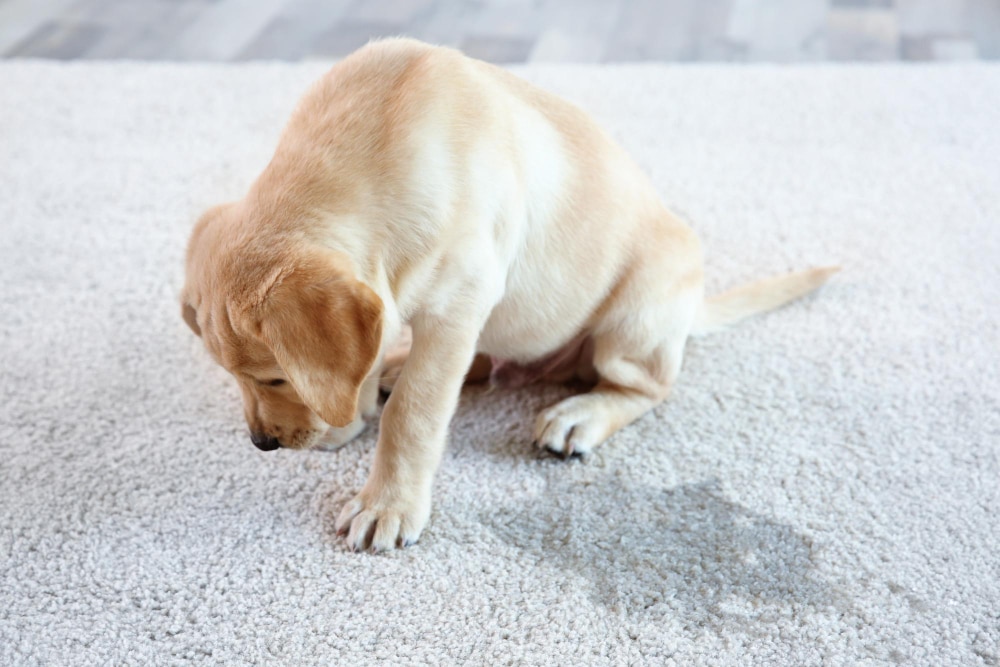
What to Do When the Accident Is Fresh
So as we have already mentioned speed matters here as does having the right technique. Many people instinctively start scrubbing and this is one of the most common mistakes, as it pushes urine deeper into the fibres and spreads the affected area outward.
Follow these steps instead:
- Blot, don’t scrub. Press firmly with paper towels or a clean absorbent cloth to draw moisture up and out. Repeat several times, using a fresh section of cloth each time.
- Rinse lightly with cold water. This dilutes what remains in the carpet. Blot again to remove the excess moisture.
- Apply a white vinegar and water solution. A roughly equal mix helps neutralise odour naturally. Apply, leave briefly, then blot again.
- Sprinkle baking soda over the area. Leave it for several hours or overnight to absorb remaining moisture and odour, then vacuum thoroughly.
A few things worth avoiding are heavily fragranced sprays and deodorisers as they only mask the smell temporarily without removing the urine itself. Some strong chemical cleaners can also damage carpet fibres or leave a sticky residue that attracts dirt over time. So it’s best to stick to gentler, proven options first.
Why Dried Urine Is a Different Problem Altogether
Once the urine has dried the approach changes significantly. Uric acid crystals become embedded in the carpet and backing, and surface cleaning alone will not reach them. This is why a carpet can seem fine for several days and then suddenly start smelling again as moisture in the air reactivates the crystals.
Home steam cleaners and supermarket carpet shampoos are often the first things people reach for, but they have real limitations here. Heat can lock proteins into carpet fibres and as such making stains harder to lift rather than easier. Most domestic machines also lack the extraction power needed to pull contamination from deep within the carpet and underlay.
For dried stains or repeated accidents in the same area, repeated surface treatments are rarely enough. The source of the odour is below the surface, and cleaning the top layer simply does not address it.
The Health Case for Keeping Carpets Clean
Odour aside any untreated pet urine creates conditions that affect indoor air quality. Ammonia released from urine can irritate the eyes, throat and respiratory system and this is more noticeable in enclosed rooms with limited ventilation. Combined with the bacteria and pet dander that carpet fibres naturally accumulate over time, repeated accidents in the same areas can meaningfully affect the indoor environment, particularly for households with young children or anyone prone to allergies.
Regular vacuuming obviously helps with surface debris, but it does not address what sits deeper in the pile. Periodic deeper cleaning of carpets, rugs, upholstery and other such soft furnishings is the more effective way to keep these contaminants from building up.
Some accidents can be handled at home successfully, but if odours keep returning after cleaning, if the stain has been sitting for weeks or if the same area has been affected repeatedly, professional carpet cleaning is likely the only way to resolve it properly.