
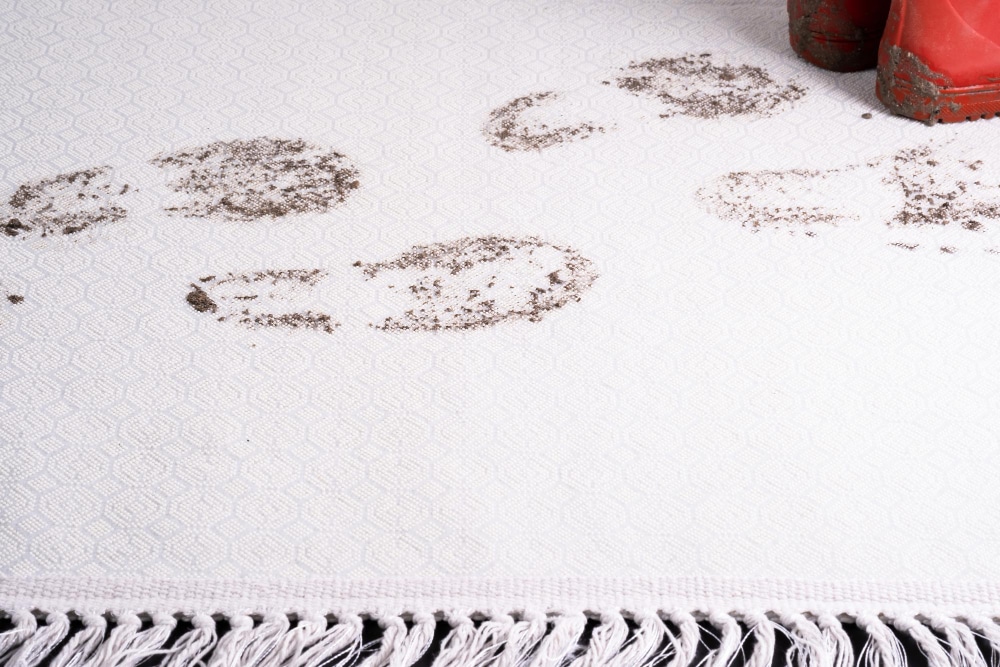
Treading in mud is just one of those things that happens from time to time, especially if you have kids, but what should you do when the inevitable happens? The best way to remove mud from carpet is to let it dry completely before touching it, vacuum away the loose soil and only then treat whatever mark is left with a small amount of mild detergent and water. Cleaning mud whilst it’s still wet is the most common mistake people make, and it’s usually what turns a footprint into a lasting stain.
It’s a fair instinct to reach for a cloth the moment you spot a muddy patch on the carpet. Wet mud though, behaves more like a paste than a solid and as such any contact spreads it further into the surrounding fibres. Rubbing at it pushes soil deeper into the pile, which makes the mark harder to lift later. Working with the mud’s natural drying process, rather than against it, gives you a much better result with far less effort.
1. Let the Mud Dry First!
Leaving a muddy patch alone runs against instinct, but it’s the step that makes everything else easier. Wet mud spreads on contact, so wiping or blotting it while damp usually enlarges the mark rather than removing it.
If the area is heavily saturated, press a clean, dry white towel gently against it to soak up excess moisture. Don’t drag the towel across the carpet, as this has the same spreading effect as wiping. Then leave the rest to air-dry.
Drying time depends on how much mud is present and the humidity in the room, although it’s often a few hours, sometimes longer. Avoid pointing a heater or hairdryer at the area to speed things up, as heat can affect certain carpet fibres.
How to tell it’s ready for the next step:
- Texture is crumbly and loose, not sticky or paste-like
- Colour has lightened to a dusty brown or grey, rather than a dark, wet-looking patch
2. Vacuum Out the Loose Soil
A vacuum cleaner does most of the real work once the mud has dried. Go over the area slowly, and approach it from a few different directions to loosen soil that has settled between fibres rather than sitting on top of them.
Pay attention to the edges of the affected patch, this is because any loose particles tend to collect there and get missed, becoming the start of a new stain if left behind. If the dried mud has formed larger clumps, break these up gently with your fingers or a soft brush before vacuuming, rather than scraping at the carpet.
Once you’ve vacuumed thoroughly, check the area in good light. In many cases, most of what looked like a stubborn stain has already lifted, leaving only a faint brown or grey mark. That residue is what you’ll treat with moisture in the next step.
3. Treat the Remaining Mark
For a small mark that survives vacuuming, mix a small amount of mild dishwashing detergent into lukewarm water. Keep the mixture weak. A heavily concentrated solution can leave detergent residue in the carpet, which tends to attract dirt again once the area dries.
Test the solution on a hidden section of carpet first, such as inside a wardrobe or under furniture, to check it doesn’t affect the colour. If it looks fine, dampen a clean white cloth and blot the mark, working from the outer edge inward. This stops the stain from spreading outward as you work.
Avoid scrubbing, even on a stubborn mark. Blot lightly and repeatedly, switching to a clean section of the cloth as soil transfers onto it. Once the mark has lifted, go over the area again with a cloth dampened in plain water to rinse away any detergent. Finish by pressing a dry towel over the spot to draw out remaining moisture, and let the carpet dry fully before walking on it.
Here a Quick Recap
- Let mud dry completely before doing anything else
- Blot excess moisture with a dry towel; don’t wipe or rub
- Vacuum slowly from multiple directions, including the edges
- Treat any remaining mark with a weak detergent solution, working from the outside in
- Rinse with clean water and dry thoroughly before walking on the area
Still Can’t Shift That Muddy Patch from Your Carpets?
Some mud stains go beyond what spot cleaning can fix. Further scrubbing is more likely to damage the carpet than help it once any of the following applies, and overworking a damp patch can also leave the carpet wet for too long, which brings its own risks. Here are some signs that maybe it’s time for you to call a professional:
- Mud has been ground deep into a thick carpet pile
- The mud or stain has been left untreated for an extended period
- A mark stays visible after careful spot cleaning
- Several muddy patches have built up across the carpet, rather than one isolated footprint
Of course, professional equipment reaches soil and moisture that sit deeper in the carpet than household methods can access, using extraction that lifts embedded material rather than just treating the surface.
If you’ve tried the steps above and a stain is still visible, it’s worth having the carpet assessed rather than working through a string of different household products. Just contact our specialists and we can help restore carpets affected by ground-in mud or stains that haven’t responded to spot treatment.