
Vacuuming removes loose dust and surface debris, but it was never designed to reach what settles deep inside carpet, rug and upholstery fibres. Dust mites, pet dander, oily residue and ground-in soil work their way down through the pile over time, and a household vacuum simply doesn’t have the suction or reach to pull them back out. This is exactly what professional carpet cleaning is built to solve, and also why so many customers ask how does it work and where did all that dirt actually go?
What’s Actually Trapped in the Fibres
Carpet works a bit like a filter for the room around it, and foot traffic carries in a lot of dust, pollen, soil and other particles from the outside, and a portion of this settles into the base of the pile rather than sitting on the surface where a vacuum can reach it.
Each time someone walks across the carpet, these particles get pressed further down and packed tighter together. Over months and years, this builds into a layer of debris that no amount of vacuuming can lift out. The same happens with rugs, upholstered furniture and mattresses, which trap dust, skin cells, oils and allergens in much the same way. It’s this deeper layer that professional cleaning is designed to reach.
How Steam Cleaning Works
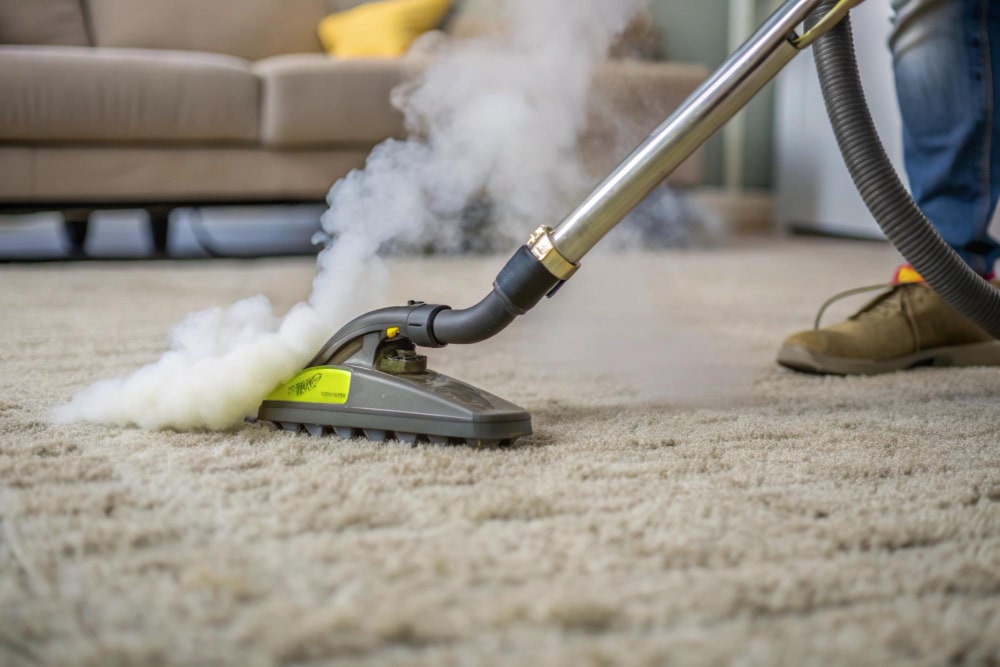
Steam cleaning or more accurately known as hot water extraction, is the method most professional cleaners use for carpets and more. The name is slightly misleading though as the process uses heated water mixed with a cleaning solution, applied under pressure. The process generally follows the same sequence regardless of the fibre being cleaned:
- Inspection
The technician checks the fabric or fibre type, along with the location and severity of any stains, since wool, synthetic blends and natural fibres each respond differently to heat and pressure.
- The Pre-treatment
Heavily soiled areas or specific stains are treated first with a targeted solution, giving it time to start breaking down residue before the main clean begins.
- Hot water application
A heated cleaning solution is applied into the fibres under pressure, reaching down into the base of the pile rather than sitting on the surface.
- Agitation
Where needed, the fibres are agitated to help the solution work through compacted areas and lift soil that has settled deep within the pile.
- Extraction
A high-powered extraction pass immediately follows, drawing the solution back out along with the soil, oils and allergens it has loosened.
- Drying
Professional-grade extraction removes the bulk of the moisture during this final pass, which is what allows them to dry within a reasonable timeframe rather than staying damp for days.
Each stage builds on the one before it. Skipping pre-treatment or rushing the extraction pass typically means more moisture, and more soil, gets left behind.
But Where Does the Dirt Actually Go?
This extraction step is where the dirt leaves the fibres for good. The same machine that applies the cleaning solution also pulls it back out, drawing the dirty water, along with everything loosened from inside the fibres, into a separate recovery tank inside the unit. None of it stays behind in the fibres. It’s collected, contained and disposed of separately, leaving the fibres cleaner and considerably drier than before the process began.
Why the Equipment Matters
Most household carpet cleaners run at lower pressure with weaker suction than professional grade machines, which limits how much dirt and moisture they can pull back out. Professional equipment applies stronger heat and pressure while extracting a much higher proportion of moisture and soil on each pass. It’s that combination that allows a professional to clean deeper into the fibres whilst leaving less moisture behind, which shortens drying time considerably.
Training matters here too as understanding how a particular fibre responds to heat, pressure and cleaning solution helps a technician protect delicate materials while still clearing embedded dirt from more resilient ones.
Soil particles also act as an abrasive and if left in place, they wear down fibres every time someone walks across a carpet or sits on upholstery, shortening its lifespan. Removing that build-up on a regular basis helps fibres hold their colour, texture and shape for longer.