
Carpet flooding is one of those situations that can escalate quickly if it’s not handled the right way. Whether it’s caused by a burst pipe, a leaking appliance, or an overflowing bathroom, water can soak deep into carpet fibres and underlay within minutes. Once that happens, it’s not just about surface damage. Moisture can spread beneath the carpet, into subfloors, and even into nearby walls, creating the perfect environment for mould and lingering odours.
For homeowners, the first few hours after a flood are the most important. Acting quickly can significantly reduce long-term damage and save you from more expensive repairs down the track. It’s also worth understanding that drying a carpet isn’t always as simple as it looks. Even if the surface feels dry, moisture can still be trapped underneath, quietly causing issues over time. Overall proper drying and cleaning techniques make all the difference when it comes to protecting your home.
Therefore, below are 6 practical and easy to follow tips to help you recover your carpet after a flood and get things back to normal as smoothly as possible.
1. Start Removing Water Immediately
The first step is all about speed because the longer water sits in your carpet, the more damage it can cause. Water begins to soak into the backing and underlay almost instantly, and once it reaches that level, drying becomes much more difficult. Using a wet dry vacuum is one of the most effective ways to extract large amounts of water quickly, and even basic equipment can make a big difference in those early stages.
If the flooding is more severe, you may notice water pooling in certain areas so focus on these spots first as they tend to hold the most moisture. After the bulk of the water has been removed, it’s important to keep air moving through the space. Ceiling fans or pedestal fans can help push moisture out of the carpet fibres. This stage often takes longer than expected, and patience is key although rushing the process can leave hidden moisture behind, which often leads to further issues later on.
2. Reduce Moisture in the Room
Drying the carpet alone isn’t enough if the surrounding air is still full of moisture. After a flood, the entire room can become humid, which slows down the drying process and increases the chance of mould forming. That’s where a dehumidifier becomes incredibly useful, and it works by pulling excess moisture out of the air, helping everything dry more efficiently.
Keeping windows open can also help if the weather allows, as fresh air circulation can speed things up. However, in more humid conditions, relying on controlled airflow and dehumidification tends to be more effective. It’s important to continue this process for at least a couple of days, even if the carpet starts to feel dry. Moisture that remains in the air can easily settle back into soft furnishings, undoing your progress and prolonging the recovery time.
3. Clean and Sanitise Surrounding Surfaces
Floodwater doesn’t just affect the carpet as walls, skirting boards and other nearby surfaces can all absorb moisture and potentially harbour bacteria. Once the initial water removal is complete, it’s important to clean these areas thoroughly with a simple solution of warm water and detergent as that can help remove dirt and residue left behind by the flood.
For a deeper clean, a mild disinfectant can be used to sanitise surfaces and reduce the risk of microbial growth. Paying attention to corners, edges, and areas where water may have pooled is especially important. Protective gear such as gloves and masks can be useful during this stage, particularly if the water source wasn’t clean. Taking the time to properly clean the entire affected area helps create a safer environment and prevents odours from developing later on.
4. Deep Clean the Carpet Once Dry
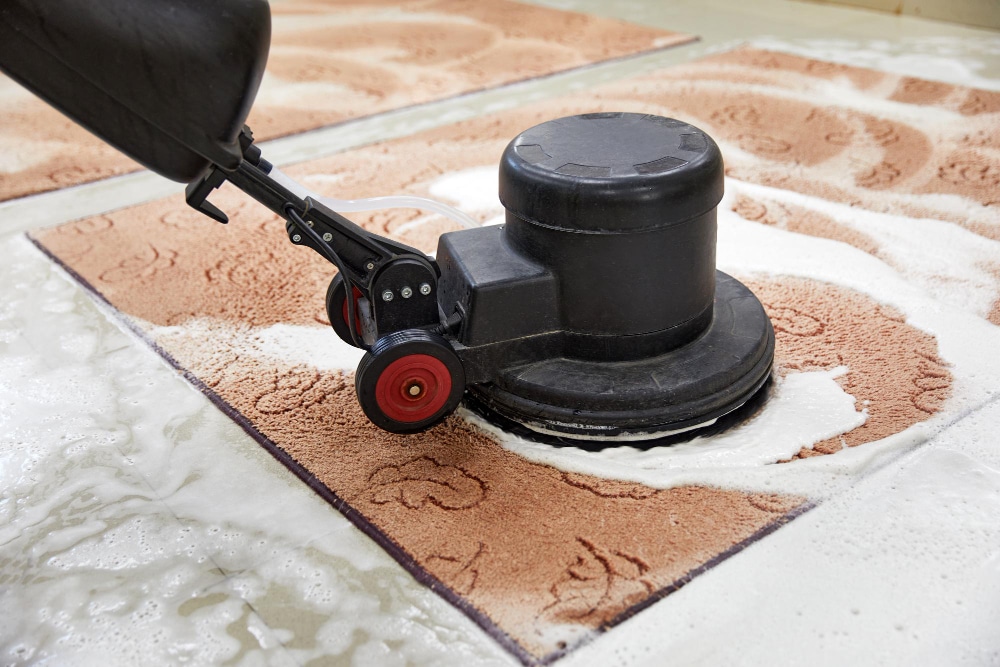
After the carpet has fully dried, it’s time to focus on restoring its condition. Floodwater can leave behind dirt, bacteria and unpleasant smells that aren’t always visible. Steam cleaning is one of the most effective ways to tackle this, as it uses high temperatures to break down grime and sanitise the fibres.
Hiring or using professional grade equipment can provide a deeper clean compared to standard household machines. This step also helps refresh the carpet’s appearance and remove any lingering odours caused by water damage. And in some cases, the underlay beneath the carpet may need to be replaced, especially if it has absorbed a significant amount of water. While this adds an extra step, it’s often a cost-effective way to avoid replacing the entire carpet.
5. Check Furniture and Soft Furnishings
Furniture that has been sitting on a wet carpet can quickly absorb moisture, leading to stains, warping or even unpleasant smells. Once the immediate water removal is handled, it’s a good idea to move furniture out of the affected area and inspect it closely. Upholstered items are particularly vulnerable, as they can trap moisture deep within the fabric.
Cleaning and drying these items separately helps prevent further damage and keeps them from reintroducing moisture back into the carpet. Hard surfaces such as wooden furniture should also be wiped down and dried thoroughly to avoid long-term damage like swelling or cracking. Taking care of these items early on helps protect your belongings and supports the overall recovery process.
6. Deodorise and Monitor for Ongoing Issues
Even after everything appears dry and clean, it’s common for carpets to develop a slight odour following a flood. This usually comes from residual moisture or bacteria that wasn’t fully removed during the initial stages. Using a suitable carpet deodoriser can help freshen things up and restore a more pleasant indoor environment.
It’s also important to keep an eye on the area over the following days and weeks. Look out for signs such as musty smells, discolouration, or damp patches returning. These can indicate hidden moisture that still needs attention. In Adelaide homes, seasonal changes can sometimes affect how quickly areas fully dry, so ongoing monitoring is always worthwhile.
If the damage is extensive or you’re unsure whether everything has been properly treated, bringing in professionals can help ensure your carpet is thoroughly restored and safe to use again.